Heat Transfer Film Guides
Practical guides for buyers and production teams: how the transfer process works, how to handle stamping temperature, how to choose film by substrate, and how to store film so it performs as delivered.
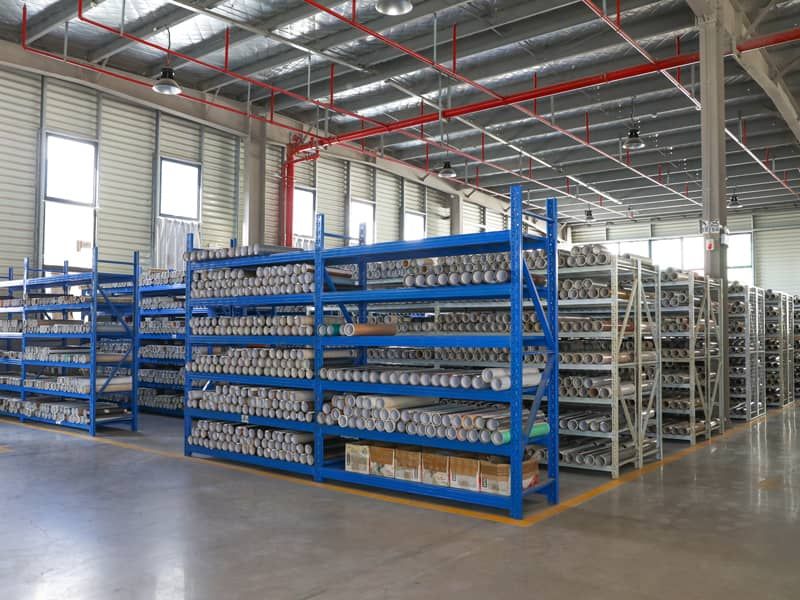
Heat Transfer Film Guides: the range in this family
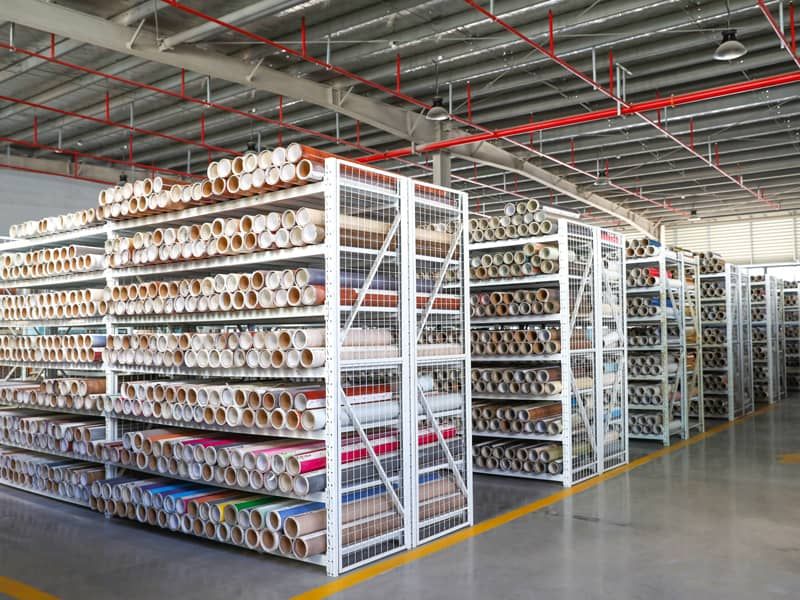
How Heat Transfer Film Works
Heat, pressure and a prepared film: this guide explains the transfer process step by step, from the layers on the roll to the moment the carrier peels away and the pattern stays on the substrate..

Hot Stamping Foil Temperature — A Trial-First Guide
Temperature settles more transfer faults than any other variable..

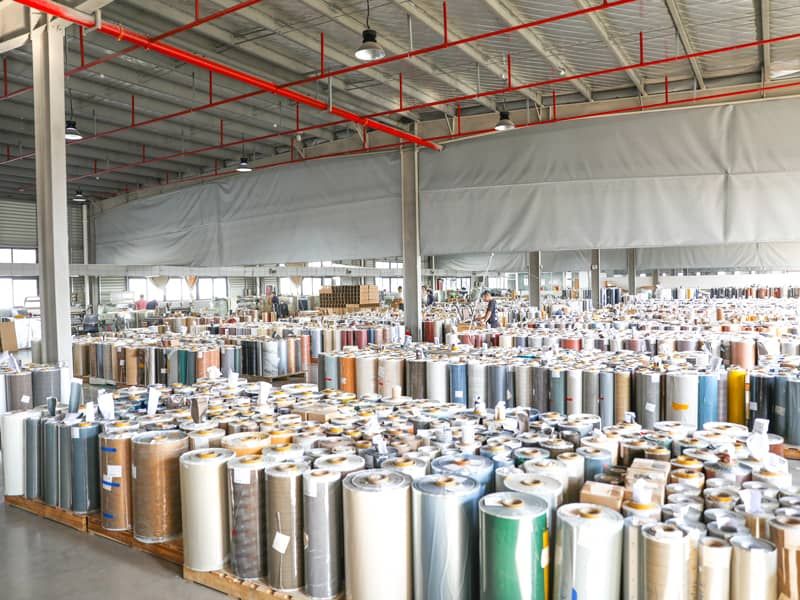
Hot Stamping Foil Storage Guide
A film roll is a stored pattern, and storage decides whether it performs as delivered..
Heat Transfer Film Guides: where this family is applied
| Form | Application notes |
|---|---|
| Flat boards and panels | Wood grain, stone and fabric patterns at full panel scale |
| Profiles and mouldings | Patterns in register along long lengths |
| Sheets and parts | Finishes matched to the end product and its daily use |
Heat Transfer Film Guides: how the finish is produced
Samples are the fastest route through this catalogue. Stock samples and catalogues let you judge colour, gloss and pattern scale on your own substrate and under your own light before any production quantity is discussed, and custom patterns begin from your drawings or physical samples.
Heat transfer and hot stamping share one principle: heat and pressure persuade a prepared film to give up its decorative layer to the substrate beneath it. The film carries the pattern; the substrate keeps it. Everything in this catalogue is a variation on that exchange, tuned by substrate, pattern and finish.
Samples are the fastest route through this catalogue. Stock samples and catalogues let you judge colour, gloss and pattern scale on your own substrate and under your own light before any production quantity is discussed, and custom patterns begin from your drawings or physical samples.
Heat Transfer Film Guides: ordering and samples
Custom development follows the same path as the standard range: a design brief or a sample, a pattern developed or matched, a proof on film, a trial on your substrate, and then production. Yearly colour card collections keep the standard range moving, so a pattern family you like can usually be refreshed rather than reinvented.
A good inquiry is short but specific: the film type you are considering, the substrate you run, the width and roll length on your machine, and the quantity per design. With those four inputs a quote can confirm the minimum run, the price and the delivery schedule for exactly the film you need.
Custom development follows the same path as the standard range: a design brief or a sample, a pattern developed or matched, a proof on film, a trial on your substrate, and then production. Yearly colour card collections keep the standard range moving, so a pattern family you like can usually be refreshed rather than reinvented.