How Heat Transfer Film Works
Heat, pressure and a prepared film: this guide explains the transfer process step by step, from the layers on the roll to the moment the carrier peels away and the pattern stays on the substrate.
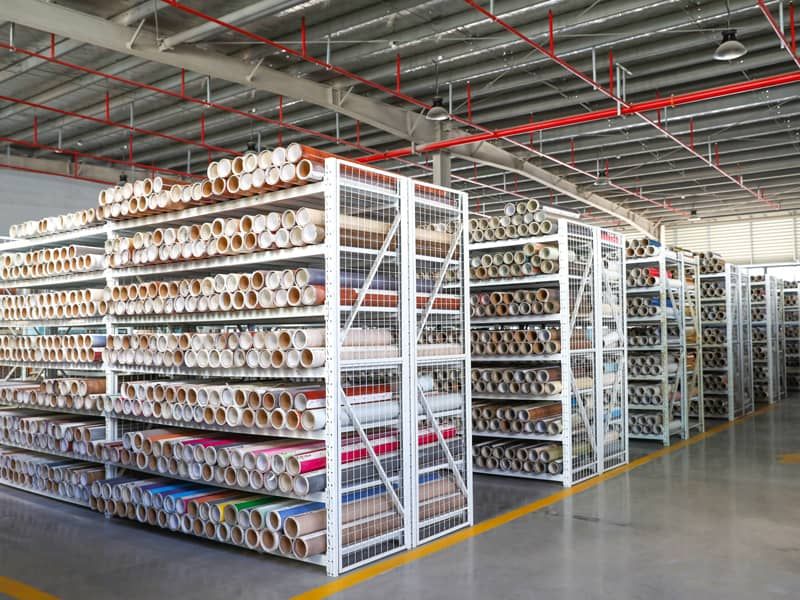
How Heat Transfer Film Works: step one
Start with the carrier. A heat transfer film is built on a base film that carries a release layer, the printed or coated decorative layer and an adhesive tuned to the substrate family. Nothing about the decoration touches the product until heat and pressure arrive; until that moment the pattern is simply stored, perfectly registered, on the roll.
Heat transfer and hot stamping share one principle: heat and pressure persuade a prepared film to give up its decorative layer to the substrate beneath it. The film carries the pattern; the substrate keeps it. Everything in this catalogue is a variation on that exchange, tuned by substrate, pattern and finish.
How Heat Transfer Film Works: step two
At the machine, the film meets the substrate under a heated roller or plate. Heat softens the adhesive and releases the decorative layer from its carrier at the same moment pressure presses it onto the surface. The carrier peels away and the pattern stays — that transfer, completed in one pass, is the whole process.
A good inquiry is short but specific: the film type you are considering, the substrate you run, the width and roll length on your machine, and the quantity per design. With those four inputs a quote can confirm the minimum run, the price and the delivery schedule for exactly the film you need.
How Heat Transfer Film Works: step three
Temperature, pressure and dwell time form the triangle every operator learns to balance. Too little heat and the layer lifts at the edges; too much and fine detail can blur or gloss can shift. Recommended stamping temperature for the anchor films in this range is 110–140 °C — run a trial on your substrate and settle your own window inside that guidance before production.
Samples are the fastest route through this catalogue. Stock samples and catalogues let you judge colour, gloss and pattern scale on your own substrate and under your own light before any production quantity is discussed, and custom patterns begin from your drawings or physical samples.
How Heat Transfer Film Works: step four
Flat hot stamping suits boards, doors, panels and sheets. Roller application suits profiles, mouldings and long lengths such as skirting and slats. The film family follows the geometry: tell us the shape you run and the process recommendation follows the shape, not the other way round.
Custom development follows the same path as the standard range: a design brief or a sample, a pattern developed or matched, a proof on film, a trial on your substrate, and then production. Yearly colour card collections keep the standard range moving, so a pattern family you like can usually be refreshed rather than reinvented.
How Heat Transfer Film Works: step five
When a transfer disappoints, work the triangle one variable at a time and record each change. Check the substrate surface is clean and dry, confirm the film family matches the substrate, then adjust temperature in small steps before touching pressure. Most faults that look like film faults resolve as process settings on the buyer's own line.
Storage decides how a film performs months after delivery. Keep rolls in a ventilated, shaded, cool place, protected from pressure, dampness, heat and direct sunshine, and keep each roll in its wrapping until it reaches the machine.
How Heat Transfer Film Works: substrates and applications
Heat transfer and hot stamping share one principle: heat and pressure persuade a prepared film to give up its decorative layer to the substrate beneath it. The film carries the pattern; the substrate keeps it. Everything in this catalogue is a variation on that exchange, tuned by substrate, pattern and finish.
Custom development follows the same path as the standard range: a design brief or a sample, a pattern developed or matched, a proof on film, a trial on your substrate, and then production. Yearly colour card collections keep the standard range moving, so a pattern family you like can usually be refreshed rather than reinvented.
Heat transfer and hot stamping share one principle: heat and pressure persuade a prepared film to give up its decorative layer to the substrate beneath it. The film carries the pattern; the substrate keeps it. Everything in this catalogue is a variation on that exchange, tuned by substrate, pattern and finish.
What to send with your inquiry
Questions from this guide? Send your substrate, your machine type and the finish you are aiming for.