Wood Grain Film vs Real Wood Veneer
Film and veneer both put a wood surface on a board, and production buyers weigh them against each other every season. This comparison covers consistency, pattern range and production reality, without pretending one answer suits every workshop.
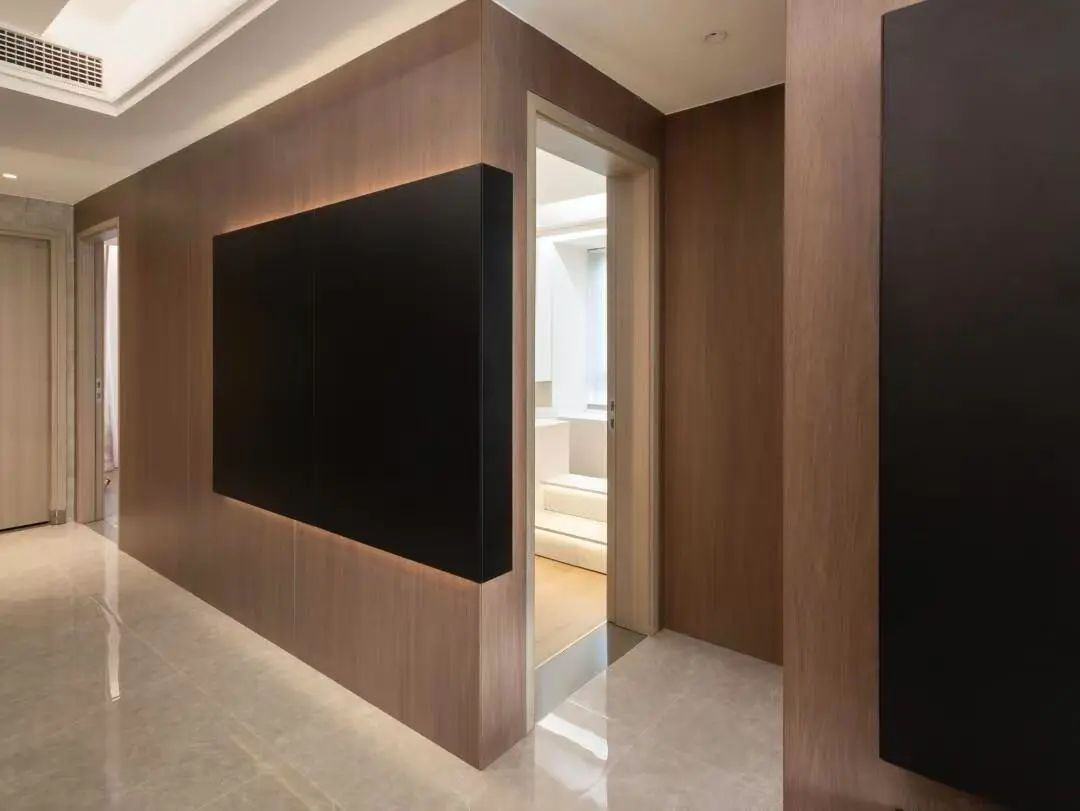
Wood Grain Film vs Real Wood Veneer: what each surface is
Natural wood veneer is a thin slice of real timber bonded to a board. Wood grain film is a printed and coated pattern carried on film and transferred to the same board by heat and pressure. Both end as a wood surface on furniture, doors and panels; they arrive there by very different routes.
Buyers comparing film with painting or veneer on MDF usually focus on consistency: every panel leaves the line with the same grain placement logic and the same gloss level, and repeat orders return to the same pattern. Send your board thickness, panel sizes and the finish you are replacing, and the shortlist will be built around your current production reality.
Wood Grain Film vs Real Wood Veneer: consistency and repeat orders
Veneer varies as timber varies — beautiful, and impossible to repeat exactly. Film repeats its grain logic panel after panel and order after order, which is why production furniture lines that must match across seasons usually choose film, while one-off pieces that celebrate variation choose veneer.
Surfaces in daily use need finishes that wipe clean and resist the knocks of furniture life. The company develops its MDF patterns for exactly that service, pairing decorative grains with surface structures intended for furniture, doors and storage cabinets that are handled every day.
Wood Grain Film vs Real Wood Veneer: pattern range
Film is not limited to species that exist as veneer: rotary-cut and straight grains sit alongside stone, fabric and metallic looks in one ordering system, and colour can be tuned to a design scheme. Veneer answers with the authenticity of real timber structure, which some buyers will always prefer.
MDF is the workhorse substrate of this range: furniture panels, lacquer-free doors, door casing lines, cabinets, wardrobes, television cabinets, flooring edges and trophy plaque banding all take heat transfer film as their finished surface. The board supplies a flat, even base, and the film supplies colour, grain and touch in a single pass.
Wood Grain Film vs Real Wood Veneer: making the choice
Decide by production reality. Volume, matching across batches, shaped or edge work and replacement panels all favour film. Small runs, repair-in-kind on timber furniture and projects specifying real timber favour veneer. Many makers use both, each where it is strongest.
Pattern direction changes how a panel reads in a room. Straight grains lengthen a door, rotary-cut oak softens a wardrobe front, and the soft fabric metal texture in low-gloss Morandi tones gives flat panels a skin-like, quiet finish that suits modern furniture lines. Black-base and white-base versions of the cracked silver line pattern let designers tune contrast on the same board.
Comparison summary
| Question | Guidance |
|---|---|
| Best starting point | The finish you need to see on the finished product |
| Deciding input | Substrate, shape and daily use |
| Proof | A trial on your own substrate settles the choice |
Wood Grain Film vs Real Wood Veneer: care, storage and repeat orders
Surfaces in daily use need finishes that wipe clean and resist the knocks of furniture life. The company develops its MDF patterns for exactly that service, pairing decorative grains with surface structures intended for furniture, doors and storage cabinets that are handled every day.
Samples are the fastest route through this catalogue. Stock samples and catalogues let you judge colour, gloss and pattern scale on your own substrate and under your own light before any production quantity is discussed, and custom patterns begin from your drawings or physical samples.
Storage decides how a film performs months after delivery. Keep rolls in a ventilated, shaded, cool place, protected from pressure, dampness, heat and direct sunshine, and keep each roll in its wrapping until it reaches the machine.
Wood Grain Film vs Real Wood Veneer: substrates and applications
Heat transfer and hot stamping share one principle: heat and pressure persuade a prepared film to give up its decorative layer to the substrate beneath it. The film carries the pattern; the substrate keeps it. Everything in this catalogue is a variation on that exchange, tuned by substrate, pattern and finish.
Custom development follows the same path as the standard range: a design brief or a sample, a pattern developed or matched, a proof on film, a trial on your substrate, and then production. Yearly colour card collections keep the standard range moving, so a pattern family you like can usually be refreshed rather than reinvented.
MDF is the workhorse substrate of this range: furniture panels, lacquer-free doors, door casing lines, cabinets, wardrobes, television cabinets, flooring edges and trophy plaque banding all take heat transfer film as their finished surface. The board supplies a flat, even base, and the film supplies colour, grain and touch in a single pass.
What to send with your inquiry
Comparing finishes for a live job? Send both options you are weighing, the substrate and the quantity per design.