Choosing Wood Patterns for WPC Wall Panels and Doors
WPC wall panels and doors live or die by their wood pattern: scale, direction and contrast decide whether a wall reads as timber or as plastic pretending. This article works through the pattern choices that convince.
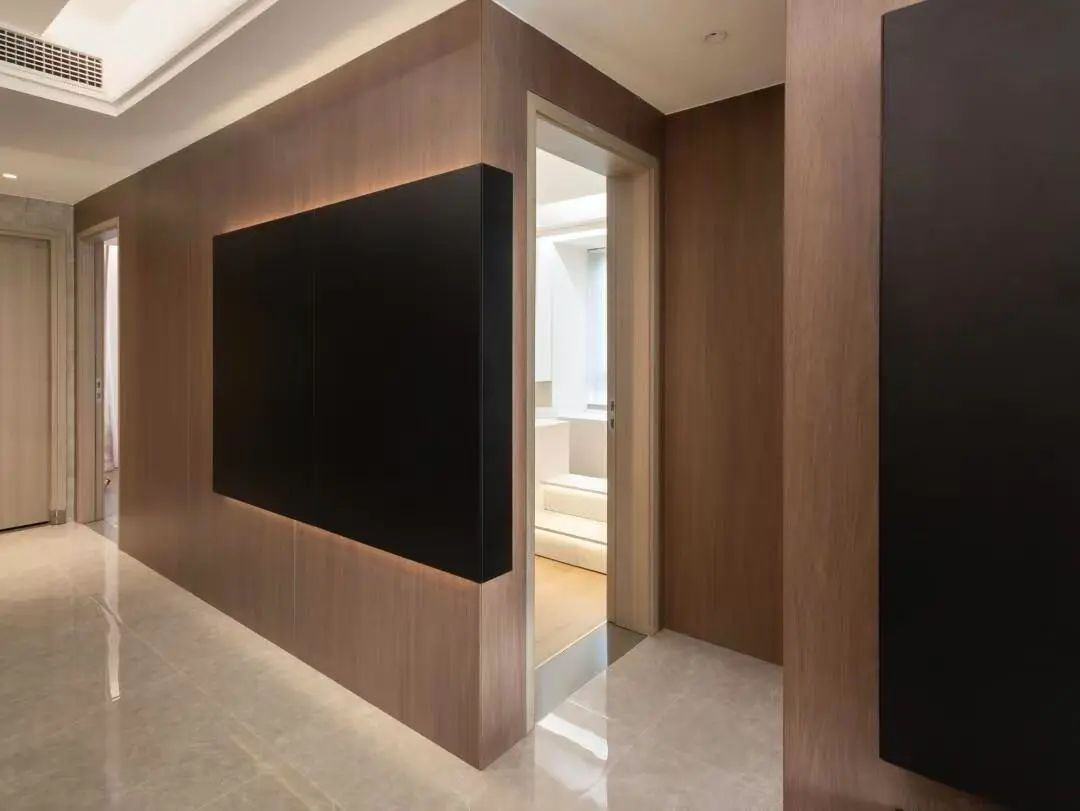
Why WPC lives or dies by its pattern
A WPC wall panel or door begins with an advantage and a suspicion. The advantage is behaviour: a stable, workable board that does not ask timber's maintenance. The suspicion is the customer's first glance, which asks whether this is wood or plastic pretending. The wood pattern answers that glance. Scale, direction and contrast decide the verdict in the first seconds, long before a hand touches the surface, which is why pattern choice — not panel engineering — is where WPC products are won and lost.
Convincing wood on WPC is not about copying a plank photograph. Real timber convinces through consistency of logic: grain that flows in one direction, features spaced the way growth spaces them, colour variation that stays inside one tree's character. A pattern that obeys that logic reads as wood even to a sceptical eye; a pattern that mixes directions, repeats too obviously or shouts its features reads as decoration, however expensive the panel beneath it.
Scale: the pattern at panel size
Samples lie about scale politely. A grain that looks rich on a hand-sized piece can become frantic across a full wall, while a quiet grain that seemed dull in the hand can settle into exactly the calm a room needs. Judge WPC patterns at the largest size the product will show: a door leaf, a wall section, a run of slatted panels. Share your leaf sizes and panel widths when you ask for samples, so the patterns sent are the ones planned for those dimensions.
Repetition is scale's second half. Ribbed and slatted panels repeat the pattern across every rib, so a feature that appears once per repeat appears dozens of times per wall. Choose grains whose features are gentle enough to survive that multiplication — straight grains, soft movement, tonal variation — and reserve bold figure for flat feature boards where it appears once and can be appreciated once. The wall will thank you by looking designed rather than busy.
Direction: grain as architecture
Grain direction is a design lever with structural force. Vertical straight grain lengthens a wall and lifts a ceiling line; horizontal grain widens a narrow room and calms a tall one; door leaves usually follow the convention of the timber doors they replace, with grain running along the leaf's height. Because film can be laid in either direction, the choice is free — but it must be made deliberately, recorded on the order, and kept consistent across panels that will meet in one room.
Slat and louver panels bend the rule with shadow. Every rib shades the next, striping the pattern with light and dark, so the grain is read through a rhythm of shadow lines. Patterns for ribbed work therefore want slightly stronger contrast than flat-board patterns: what looks bold on a flat sample reads as balanced once the ribs have taken their share of light. Trial a length of your own profile, hung and lit as the room will light it, before the full run is fixed.
Contrast and colour in real rooms
WPC panels are specified for rooms, not for sample boards, and rooms have light with opinions. Cool daylight cools pale oaks; warm evening light deepens mid-tones; commercial lighting flattens weak contrast entirely. The reliable method is unglamorous: view the shortlisted patterns in the room type they will serve, at the distance customers will stand, and reject any colour that only works under the showroom's lamps. A pattern that survives ordinary light will survive the building's life.
Colour families in the WPC range run from clear and Nordic pale oaks through bark-textured and cork-toned browns to stone-adjacent travertine looks for doors that want mineral calm instead of grain. Mixing is allowed and often wise — timber-toned panels with stone-toned doors, for instance — provided the mix is planned as one scheme with shared temperature and gloss, rather than accumulated from separate orders that each looked fine alone.
Doors: the hardest audience
A door is judged whole, at arm's length, every day, by the people who live with it — the hardest audience any pattern faces. Door patterns must hold their logic across the full leaf without a suspicious repeat, keep their figure quiet near handles and edges where eyes linger, and match across the pairs and runs a building orders together. Fine stripe textures have grown popular for exactly this duty: a contemporary linear calm that never has to impersonate a tree at all.
Close the specification the way all film specifications close: with a trial and a record. Run the chosen pattern on your own door construction — flat leaf, moulded skin or wrapped profile — and judge the corners and edges as severely as the face. Record the pattern, direction, contrast choice and settings on the job card. A WPC door that passes its own household's daily glance has passed the only review that matters.
When wood is the wrong answer
Not every WPC surface should imitate timber. Fine stripes, cement textures, travertine calm and fabric looks serve interiors where wood would be noise — minimalist rooms, commercial walls, doors in stone-toned schemes. The pattern discipline of this article still applies: scale judged at product size, direction chosen deliberately, contrast proven in real light. The only change is the reference: instead of asking whether it could be a tree, ask whether the surface looks intentional.
That freedom is WPC's quiet advantage over the material it replaces. Timber limits a designer to species that exist and boards that behave; a WPC panel carries any surface the room actually wants. Ranges that mix timber-true panels with honestly non-timber ones — grain where warmth is wanted, mineral calm where it is not — usually age better commercially than ranges that pretend everything is oak.
Choosing Wood Patterns for WPC Wall Panels and Doors: questions, answered
What makes a wood pattern on WPC look unconvincing?
Broken grain logic: mixed directions, features repeated too obviously, or figure too bold for the panel's ribs. Patterns that obey one tree's growth logic, at the right scale, are the ones that pass the first glance.
Should slat panels use the same pattern strength as flat boards?
No. Ribs stripe the pattern with shadow, so slatted work usually wants stronger contrast than flat work. Trial a length of your own profile under the room's real lighting before fixing the run.
Which sizes should be shared when sampling WPC patterns?
Door leaf dimensions, panel widths and the length of a typical wall run. Patterns are judged and repeats planned at those sizes, not at sample size.
What to send with your inquiry
Working on a similar job? Send the film type, the substrate and the quantity per design for a quote.