Transfer Film or Painting for Furniture Panels?
Furniture workshops revisit this choice whenever a new line is planned. This article compares film and painting on furniture panels honestly — finish range, production rhythm, consistency and repair — so the decision rests on your product, not on habit.
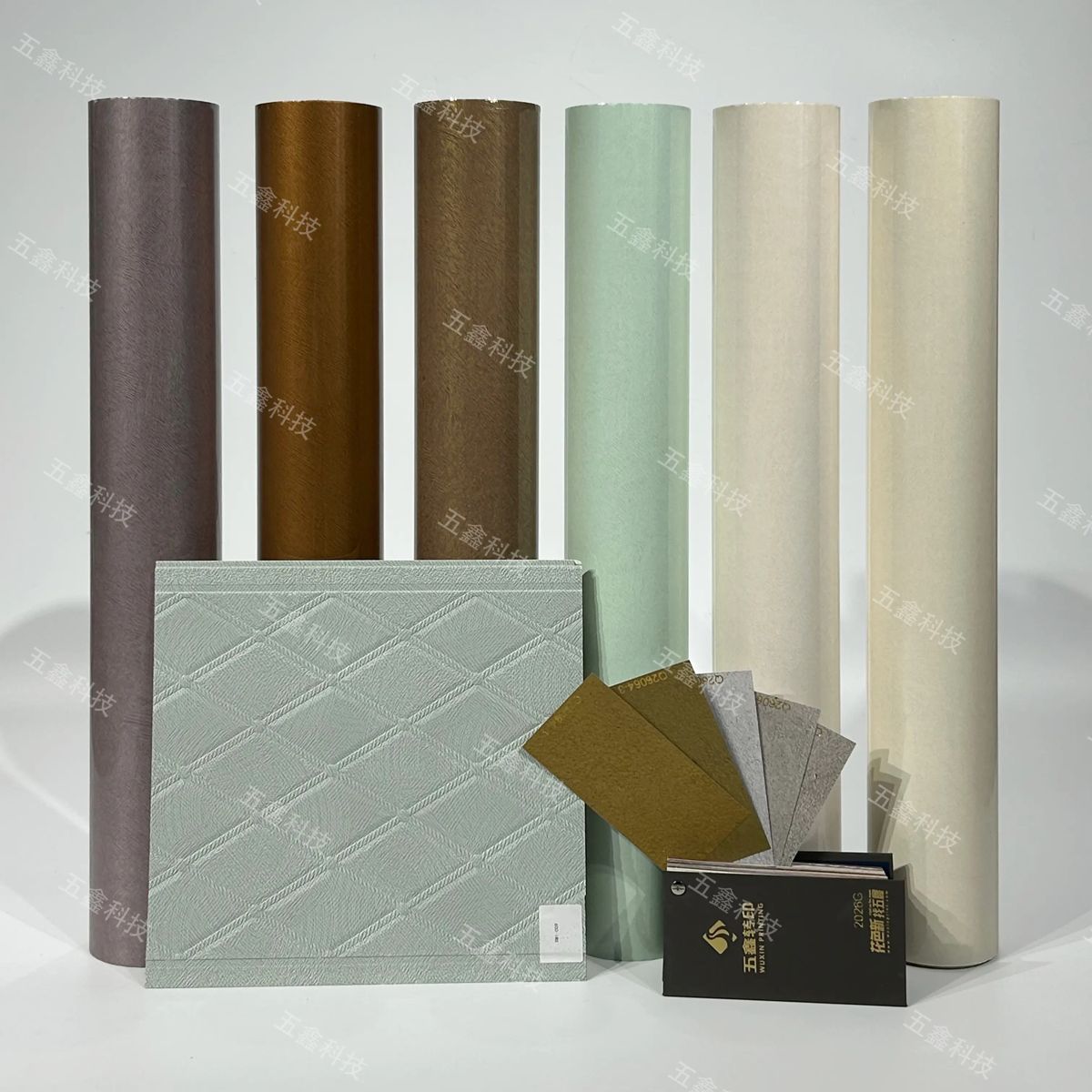
The choice every furniture line revisits
Whenever a furniture line is planned, the same argument returns to the workshop: finish the panels with transfer film, or paint them? Both routes are respectable, both are proven, and the right answer changes with the product. This article compares the two honestly — finish range, production rhythm, consistency and repair — on the furniture panels where the choice is actually made, so the decision can rest on your product's reality rather than on workshop habit or on whichever process the last line happened to use.
State the contenders fairly. Painting builds a finish on the panel itself, coat by coat, with drying and sanding between stages, and its strengths are flat colour, small-batch flexibility and familiar repair. Film arrives with its finish already made — colour, grain, gloss and texture manufactured into one layer — and is applied in a single heated pass. The workshop trades a coating line for a stamping step; everything else in this comparison follows from that exchange.
Finish range: what each can draw
Paint is a superb colourist and a limited illustrator. Flat colours, soft sheens and simple effects are entirely its territory, and a skilled sprayer can make an MDF panel look expensively plain. But furniture increasingly wants to look like materials — oak with pore character, woven fabric, cool stone — and drawing those convincingly in paint demands specialist artistry panel after panel. Film carries everything print can draw, identically, on every panel: the design work happens once, at pattern development, and production merely repeats it.
Texture widens the gap. A film's surface structure — fabric softness, brushed metal, relief ripple — is manufactured into the layer and survives the transfer, giving furniture a tactile dimension paint rarely attempts. For product lines whose selling point is touch as much as sight, that manufactured texture is often the deciding argument, and it is one painting cannot answer without changing what painting is. Judge both finishes by hand as well as by eye before deciding.
Production rhythm and consistency
A stamped panel leaves the machine finished. A painted panel leaves for drying, then curing, then inspection, with sanding and further coats in between — a rhythm of queues, booth time and weather-sensitive waiting. Lines feel that difference in throughput and in floor space, and they feel it again in consistency: a film finish is made under factory control on the roll, so the hundredth panel matches the first, while a painted finish is remade by booth conditions every single day.
Consistency compounds across seasons. A furniture line reordered next year from the same film specification returns to the same grain logic and gloss; a painted line depends on colour matching, gun settings and the same painter's hand. Neither is impossible to manage — painters manage it daily — but the management burden sits in different places, and a buyer should choose knowingly which burden their production would rather carry.
Where painting still wins
Honesty requires the other column. Painting wins on flat colour at small scale, where a film order's setup cannot compete with a spray gun's immediacy. It wins on one-off and bespoke pieces, on shaped work that stamping geometry cannot reach, and wherever the design brief is a single exact colour rather than a material look. It also wins on familiar repair: a painter can touch in a damaged corner in minutes, in any workshop, with no specification to consult.
Film's repair answer is different rather than absent: replacement panels. Because the finish repeats exactly, a damaged door or side can be re-made to match the installed line — an argument that grows stronger the longer a product range stays in production. Makers who sell continuity, spare parts and range extensions across years often find that answer worth more than the touch-up brush; makers of one-off pieces rarely do. The product's commercial life decides which repair philosophy fits.
Making the decision on your product
Decide with three artefacts on the table: the finish you are replacing or imagining, a real panel size you run, and the volumes your line honestly expects. Patterned, textured or material-look finishes at production scale point to film; flat colour at small scale points to paint; the honest middle — flat colours at scale — is decided by rhythm, consistency and how long the range must match itself. Send the finish and the panel sizes, and the comparison can be trialled on your product instead of debated in the abstract.
Many mature makers refuse the either-or entirely: film for the material-look lines where it is unbeatable, paint for flat-colour and bespoke work where it is. The processes stop competing once each is assigned to the work it does best. If this article has a verdict, it is that one — judge the finish in front of you, not the last argument in the workshop.
Cost, honestly framed
Buyers inevitably ask which route costs less, and the honest answer is that the comparison is meaningless until it is made per finished panel, on a real line, including everything each route consumes: coats and booth time and rework on one side; film, stamping time and trial discipline on the other. Headline material prices mislead in both directions. Cost the comparison on your own volumes and your own reject experience, and let that arithmetic — not a catalogue claim from either camp — carry the economic part of the decision.
Include time in the costing. A finish that queues for drying occupies floor, delays orders and complicates scheduling in ways a per-panel figure hides; a finish that arrives ready-made on a roll converts that queue into a single machine pass. Conversely, a workshop already rich in booth capacity and poor in stamping experience may find paint's economics genuinely better. The spreadsheet belongs to your factory, which is why this article refuses to fill it in for you.
Transfer Film or Painting for Furniture Panels?: questions, answered
For flat colour furniture, which finish is better?
At small scale, painting usually wins on immediacy and simplicity of setup. At production scale with long matching requirements, film's consistency can overtake it. Volumes and matching life decide.
Can film really match across orders placed years apart?
That is its structural strength: the finish is manufactured into the roll and recorded on a job card, so repeat orders return to the same grain logic, colour and gloss.
What information settles the comparison for a real line?
The finish being replaced or imagined, real panel sizes, and expected volumes. With those, both routes can be trialled and costed on your product rather than in theory.
What to send with your inquiry
Working on a similar job? Send the film type, the substrate and the quantity per design for a quote.