Turning Plain Substrates into Finished Surfaces
An undecorated board is a cost; a finished surface is a product. This article follows one ordinary substrate — an MDF panel — through the choices that turn it into furniture, doors and cabinetry with film.
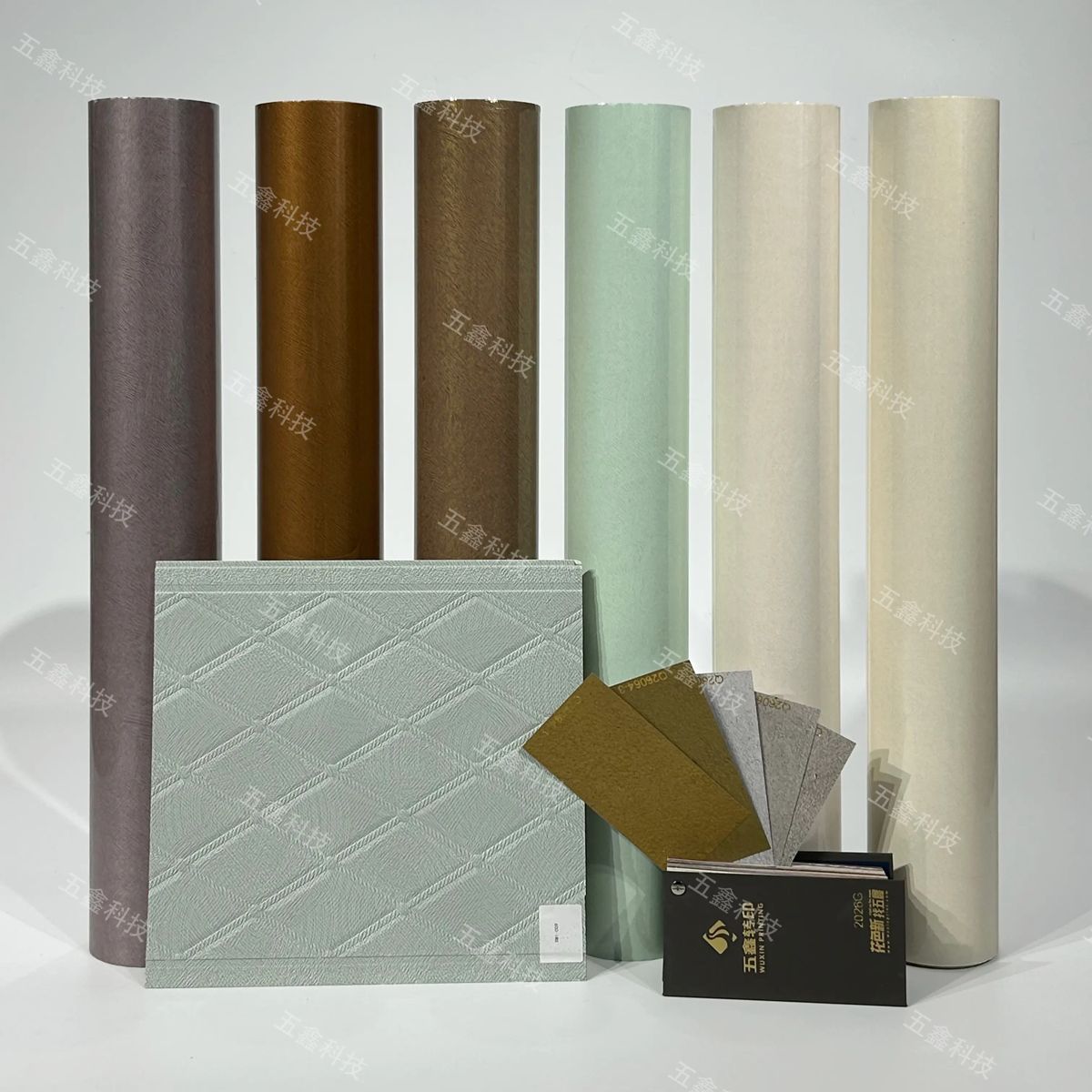
The plain board problem
An MDF board leaves the press as a capable but anonymous object: flat, even, strong enough for furniture work, and visually unfinished. Nobody buys a cabinet because its core is competent. The board's value is locked until its surface tells the customer what the product is — timber-toned, fabric-soft, stone-cool. This article follows that single ordinary substrate through the decisions that turn it into finished furniture, doors and cabinetry, because the MDF route shows, in miniature, every choice a buyer makes when any plain substrate becomes a designed surface.
The first decision is what the surface must present. Film does not hide the board; it gives the board a designed face whose grain, colour and touch are chosen rather than inherited. A wardrobe front in rotary-cut oak, a door in straight grain, a cabinet side in a quiet fabric-metal texture: each is the same board wearing a different intention. Naming the intention before browsing patterns keeps the shortlist honest and short, and it gives the eventual trial a standard to be judged against.
Face work and edge work are different jobs
A panel has two kinds of surface and they should be specified separately. The face is broad, flat and seen at distance; the edges are narrow, handled and seen close. Face film carries the pattern at full scale, while edge banding carries a reduced, tougher version of the same design logic onto chamfers, plaque edges and frameless-picture borders. Ordering both as one matched family, with face widths and edge widths listed separately in the inquiry, prevents the common failure of a beautiful face finished with an unrelated edge.
Panel size belongs in the same conversation. Large panels show pattern repeat, so grain direction and repeat logic are planned at panel size rather than sample size. Narrow components — casing lines, flooring edges, trophy plaque banding — reverse the problem: the pattern must survive being cropped to a strip. Send the panel dimensions and the component list together, and the film set can be planned as a family instead of as unrelated rolls that happen to share a colour name.
Why film suits the board's nature
MDF rewards film because the board is consistent. Its surface is even from panel to panel, so a transfer that proofs cleanly on one board repeats across a production run with the same grain placement logic and the same gloss level. That repeatability is the commercial heart of the pairing: furniture lines that must match across seasons, and replacement panels that must match installed ones, depend on a finish that does not drift the way natural material drifts.
The board also asks little of the process. Flat hot stamping lays the film across the panel in one heated pass, and the panel leaves the machine finished — no coating line, no drying interval, no sanding between coats. For production furniture that rhythm matters as much as appearance: the finish is made under factory control on the roll, and the workshop's job is a clean, well-set transfer rather than the creation of the finish itself.
Choosing the finish by the room it will live in
Furniture surfaces are specified by rooms. A television cabinet lives under screen light and dusting; a wardrobe lives behind hands and hangers; a kitchen-adjacent cabinet lives near steam and wiping. The pattern conversation should start from that room: gloss levels that show dust honestly, grains that forgive fingerprints, fabric textures that soften large flat fronts. A finish that is merely attractive in a sample book can be tiring at wardrobe scale or fragile in a hallway's daily traffic.
Colour direction changes the room with it. Straight grains lengthen a door and calm a tall unit; rotary-cut movement softens wide fronts; pale Nordic tones lighten small rooms while deep antique shades anchor large ones. Because the same board can carry any of these, the design decision is free to follow the room rather than the material stock — one of the quiet freedoms film gives furniture makers who previously designed around whatever veneer or paint the season offered.
From one panel to a product line
The step from a single finished panel to a product line is paperwork. Record the film, the board, the settings and the approved appearance on a job card; keep an approved panel as the reference; list face and edge films as one family. With that record, a second product — a matching door, a new cabinet size — starts from a proven finish instead of from a fresh search, and the line grows by extension rather than by reinvention.
That is the real transformation this article has followed. The board did not change; the decisions around it did. A plain substrate becomes a finished surface when intention, face-and-edge planning, process fit and a written record are added to it. Buyers who make those four additions once can repeat them across every substrate in their range, which is why the humble MDF panel is the best teacher in this catalogue.
The same lesson on other substrates
Everything this article said about MDF translates, with adjustments, across the catalogue. PS mouldings trade the panel's flatness for profile geometry; WPC adds indifference to moisture and asks more of pattern logic; ABS adds product scale and brand scrutiny; aluminium adds surface preparation. The sequence never changes — intention, faces and edges, process fit, record — only the weights move. A buyer fluent in the sequence can walk up to an unfamiliar substrate and know which questions to ask first.
That fluency is the real deliverable of a first film order done properly. The panels are sold and forgotten; the method remains, shortening every later specification and preventing the expensive kind of surprise. Treat your first substrate as the training ground it is: document it generously, trial it honestly, and the rest of the range becomes a series of variations rather than a series of new risks.
Turning Plain Substrates into Finished Surfaces: questions, answered
Should face film and edge banding be ordered together?
Yes, as one family. List face widths and edge widths separately in the same inquiry so colour, grain logic and gloss are matched across the panel and its borders from the start.
What panel information helps most in a first inquiry?
Board thickness, panel sizes, which components are faces and which are edges, and the finish the film will replace. Those details let the shortlist be built around your production rather than around the catalogue.
Can a film finish match an existing furniture line?
Usually closely. Send a physical sample or a finished component from the line, and the pattern and colour can be developed or matched against it, then proven on your own board before production.
What to send with your inquiry
Working on a similar job? Send the film type, the substrate and the quantity per design for a quote.