IMR Technology in In-Mold Decoration, Explained
IMR — in-mold release decoration — moves a printed pattern from film to part inside the mould itself. This article explains how the process works and where it earns its keep among the in-mold family.
What IMR actually does
IMR — in-mold release decoration — moves a printed pattern from a film into a molded part while the part is being formed. The film feeds through the mould like a ribbon; resin is injected behind it; heat and pressure inside the mould persuade the decorative layer to leave its carrier and bond to the part's surface; the carrier is then released and wound away. The part that comes out of the tool is already decorated, with the pattern sitting in its surface rather than on it as a later addition.
The release in the name is the elegant part. In most transfer processes the carrier's job ends when the pattern lets go; in IMR that letting-go happens inside a closed mould, timed with the moulding cycle itself. Decoration stops being a separate production step with its own handling, alignment and reject risk, and becomes one beat inside the moulding rhythm. For high-volume molded parts, removing a whole downstream process is the technology's first and largest argument.
Where IMR earns its keep
IMR suits parts that are moulded in volume, carry decoration across broad or gently curved faces, and would otherwise need painting, printing or labelling after moulding. Appliance panels, electronic housings and automotive interior components are its natural home: parts whose surfaces are brand-visible, whose production runs are long, and whose decoration must repeat identically from the first part to the last. A pattern locked into the moulding cycle repeats with the discipline of the cycle itself.
It earns less where runs are short, designs change weekly, or the decorated area is a small defined graphic rather than a surface treatment. Those jobs usually belong to its relatives: in-mold labelling for a precise graphic zone placed into the mould, or out-of-mold decoration applied to finished parts whose geometry or schedule keeps decoration outside the tool. Choosing among the three is a production decision before it is a design decision, and it should be made with the part's real volumes on the table.
Patterns the process carries well
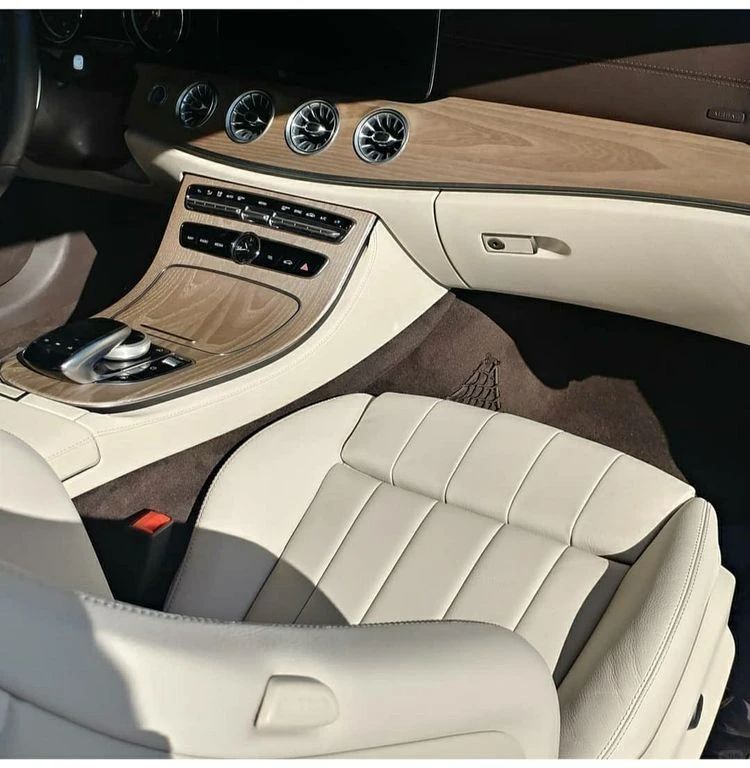
The in-mold pattern families — stone textures, gilded silk filaments, weathered and washed oak, old elm, fluid art, fine canvas weave — share one trait: they read as materials at arm's length. That is exactly the distance at which molded parts are judged. A wood that convinces across a dashboard panel or an appliance front replaces heavier, costlier material cladding; a woven texture gives a housing the touch of fabric while keeping a moulded part's cleanability and strength.
Pattern choice must still respect the mould. Decoration stretches and moves as the film forms into the cavity, so deep draws and sharp geometry distort fine detail more than broad movement does. Grains, stone movement and fluid designs forgive that forming; precise logos and tight geometric repeats expose it. Discuss the part's depth and radii when the pattern is chosen, not after the first moulding trial reveals what the geometry has done to the design.
What to send when you brief an IMR job
Send the part before the pattern. Drawings or samples of the component, the resin you mould, the surface area to be decorated and the production volume tell the film side what structure to develop. Resin matters because the decorative layer must bond to that specific material inside the mould; geometry matters because the film must form without tearing or bridging; volume matters because the development effort is justified by the run it will serve.
Expect a development conversation, not a catalogue pick. The pattern is proofed against the part, trialled in the mould, and corrected for the distortion the forming introduces, so the approved appearance is the appearance on the moulded part — not on a flat sample. Buyers who budget time for that loop get a specification that survives production; buyers who skip it meet the distortion for the first time at production scale, where corrections are slowest and most expensive.
IMR among its relatives
Seen as a family, the in-mold technologies divide by timing. In-mold decoration forms the film with the part so decoration follows curves as part of the component's surface. In-mold labelling places a label element into the mould to bond as a defined graphic area. Out-of-mold application decorates the part after moulding, suiting parts whose route keeps decoration outside the tool. IMR's distinction is the release: the carrier leaves inside the cycle, and decoration and moulding finish in the same moment.
None of these is the advanced option and none is the cheap one; each is the right answer to a particular part. The questions that sort them are concrete: How deep is the draw? How large is the decorated area? How long is the run? How often will the design change? Answer those against a real component and the family member chooses itself — which is why every in-mold conversation in this catalogue starts with the part, not the pattern.
Cycles and honest expectations
IMR's economics live in the cycle. Decoration adds no separate handling, no second machine queue and no post-mould finishing labour, but it does ask the moulding cycle to carry the film feed reliably, part after part. The balance favours volume: the longer the run, the more the saved downstream steps outweigh the development and setup the film side requires. Short runs reverse the arithmetic, which is why volume belongs in the first brief rather than in the final negotiation.
Set expectations about development time with the same honesty. A pattern that must survive forming is engineered, not picked: proofing against the part, mould trials, distortion correction. Programmes that schedule that loop calmly launch with a specification that holds; programmes that compress it spend the saved days later, at production scale, where every correction is multiplied by the run it interrupts.
IMR Technology in In-Mold Decoration, Explained: questions, answered
How is IMR different from ordinary in-mold decoration?
In IMR the carrier film releases its decorative layer inside the mould during the cycle and is wound away, so the decorated part leaves the tool finished. The decoration step and the moulding step are the same step.
What part information does an IMR brief need first?
Drawings or a sample of the part, the resin, the area to be decorated and the expected volume. Pattern selection comes after those, because geometry and resin decide what the film must do.
Can IMR carry a company logo crisply?
Defined graphics are usually the strength of in-mold labelling rather than IMR, because forming can distort fine detail. Send the artwork and the part together and the right family member can be chosen honestly.
What to send with your inquiry
Working on a similar job? Send the film type, the substrate and the quantity per design for a quote.